Kansas, Missouri, Oklahoma and Arkansas
Bathroom tile installation, waterproofed before the first tile goes up
Get tile that looks right and stays dry behind it, because the slope, the waterproofing and the floor beneath are built correctly first.
Free in-home estimate. No obligation.
Updated
Key takeaways
- Tile and grout are not waterproof; the membrane or pan liner under them keeps water out of the walls.
- The shower floor must slope to the drain before any tile is set, and the pan should be flood tested.
- Large tile needs very flat walls and floors, while small mosaics suit shower floors because the extra joints add grip.
Overview
What is bathroom tile installation?
Quick answer
Bathroom tile installation covers tile floors, tiled shower walls and floors, tub surrounds and backsplashes, each set over a base built for water. In a shower, the work starts well before tile: a floor sloped to the drain, backer board instead of drywall, and a waterproofing membrane over the shower walls and the pan. The tile and grout go on last, as the finish rather than the waterproofing.
Scope
What is included in bathroom tile installation?
- Removing old tile and board down to sound framing where water reached it
- Flattening walls and floors so tile sits even, with no raised edges between tiles
- A sloped shower pan and backer board, never drywall, in wet areas
- A waterproofing membrane over the walls, pan, niche and bench, then a flood test
- Setting tile, grout and trim, with flexible sealant at corners and changes of plane
- Sealing grout or stone where the material calls for it
Options
What are your options for bathroom tile?
Bathroom tile installation: options compared
| Option | What it is | Suits | Watch for |
|---|---|---|---|
| Porcelain | Dense, fired tile that absorbs very little water, made through-body or glazed. | Shower walls and floors, heated floors, and stone or wood looks without the upkeep. | Hard to cut cleanly; large sizes need a flat surface and the right mortar. |
| Glazed ceramic | A softer clay body under a fired glaze that carries the color and takes the wear. | Walls and backsplashes, and patterned or colored tile at a lower material cost. | Check the floor rating before using it underfoot; a chip shows the clay beneath. |
| Natural stone | Marble, slate, travertine or limestone, each piece cut from quarried stone. | Owners who want real stone and accept regular sealing and gentle cleaners. | Marble etches with acids, stone needs resealing, and it asks for a stiffer floor than porcelain. |
| Large-format tile | Big tiles laid with few grout lines on walls and floors. | Walls, and shower floors that slope one way to a linear drain. | Needs a very flat surface and full mortar coverage, or edges sit uneven and tiles crack. |
At your estimate
What do we check before we quote tile work?
What is behind the old tile
Why it matters: Drywall, greenboard or an old mortar bed tells us how deep demolition goes and whether waterproofing was ever there.
How flat and plumb the walls and floor are
Why it matters: Large tile shows every dip, so we flatten, shim or reframe first instead of trying to fix it with mortar.
How stiff the floor is
Why it matters: A floor that bounces cracks tile and grout, and natural stone needs a stiffer floor than porcelain.
The drain type and where it sits
Why it matters: A center drain needs the pan sloped from every side; a linear drain allows one slope and larger floor tile.
Your tile, its size and the layout
Why it matters: Tile size and pattern change labor and waste, and we plan cuts so niches and edges avoid thin slivers.
Who it suits
Who is bathroom tile installation right for, and who should choose something else?
Quick answer
Bathroom tile installation is right for owners who want a custom shower size, a built-in niche or bench, a floor that runs into the shower, or the look of stone or patterned tile. It asks for more labor and some upkeep at the grout. If you want the fewest seams to clean and a quicker install, an acrylic wall system may suit you better, and we install that too.
Typical cost
How much does bathroom tile installation cost for a shower?
Bathroom tile installation for a shower costs $1,800 to $5,000 for the tiling, with an average of $2,700, according to Fixr. A complete mid-range tiled walk-in shower runs $8,000 to $13,000 in This Old House figures, because that also covers the pan, waterproofing, valve and glass. Tile type and size move the labor most. These are national typical ranges; your written quote sets the real number.
Sources: Fixr, "Shower Tiling Cost" (Aug 2025); This Old House, "How Much Does a Walk-In Shower Cost? (2026 Guide)".
Typical timeline
How long does it take to tile a shower?
A professional retile takes 3 to 5 days, according to This Old House, and Fixr advises at least 3 days of curing before a new tile shower is used. A full tile shower takes longer, since the pan, membrane and flood test all come before any tile. Using a shower before the grout and mortar cure can weaken them. Your written quote confirms the schedule.
Sources: This Old House, "How Much Does Retiling a Bathroom Cost? (2026 Guide)"; Fixr, "Shower Tiling Cost" (Aug 2025).
Good to know
What goes into a custom tile shower installation?
Quick answer
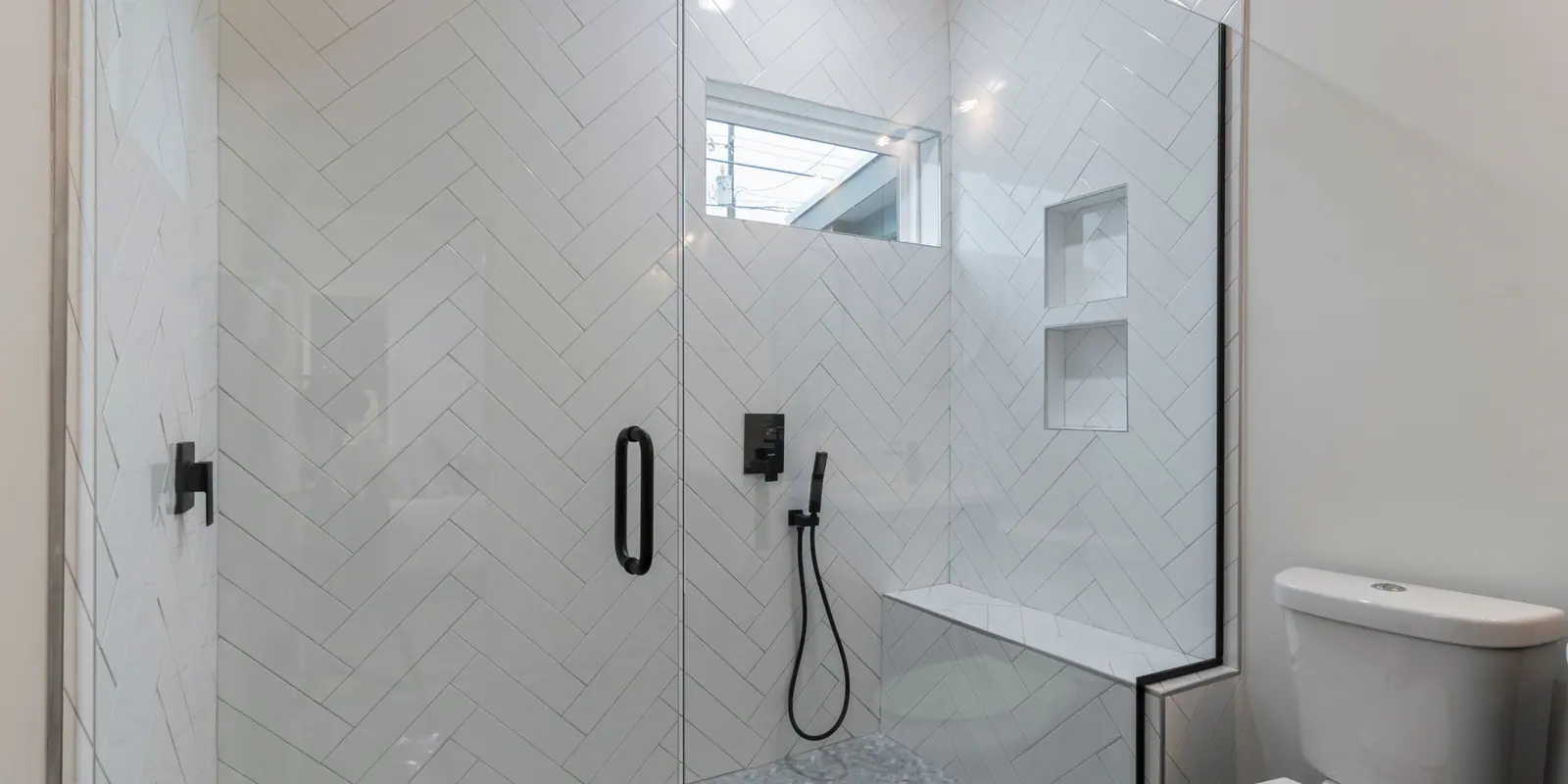
A custom tile shower installation goes up in layers: framing and blocking, plumbing, a pan sloped to the drain, backer board, a waterproofing membrane, a flood test, then tile, grout and trim. Niches and benches are framed early and waterproofed with the walls. The glass is measured after the tile is set, because it has to fit the finished surfaces.
Read the guide: Custom Tile Shower Installation: What to Expect
Good to know
What keeps water out of the walls behind tile showers?
Quick answer
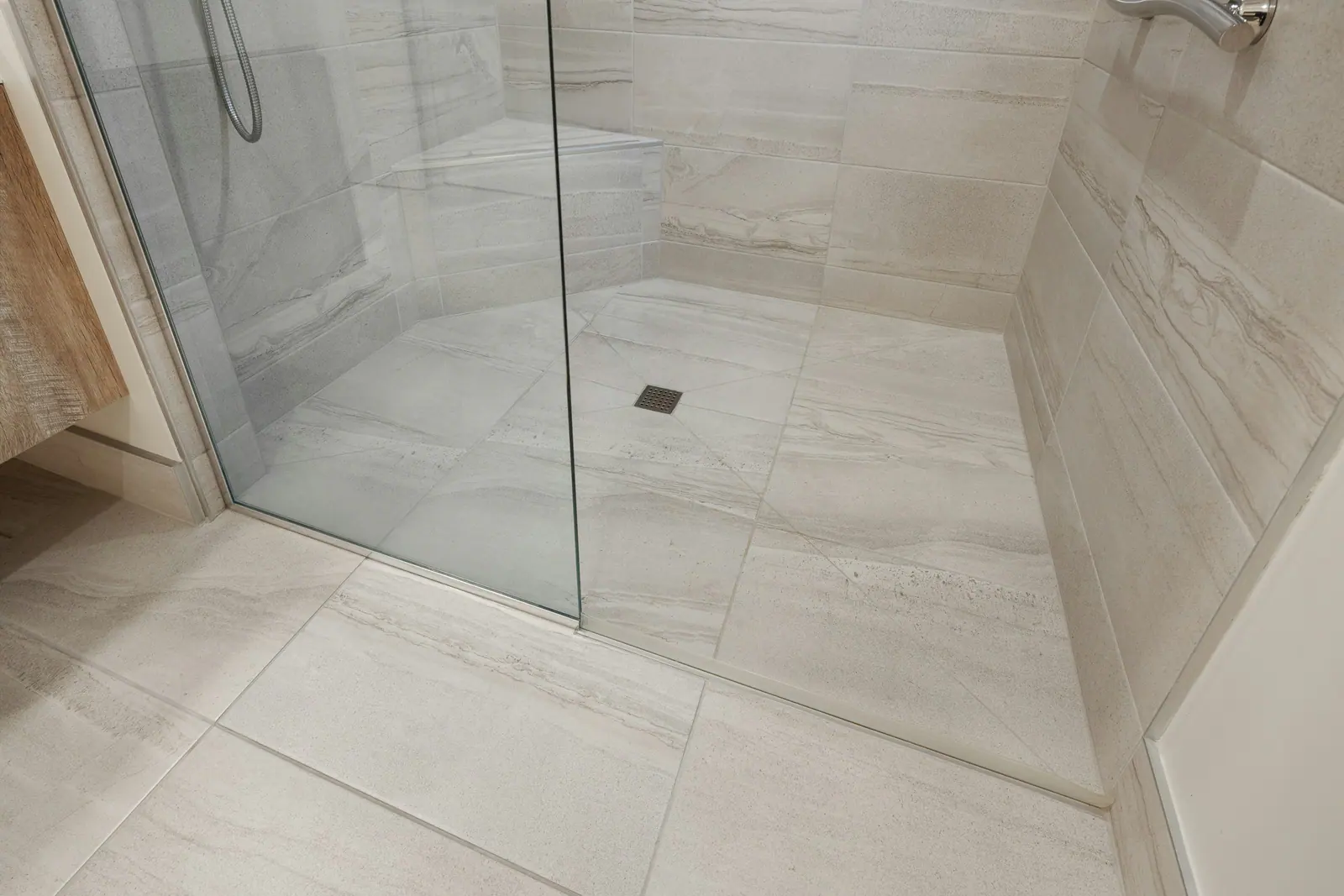
A waterproofing membrane keeps water out of the walls behind tile showers, not the tile itself. Grout absorbs water and cement backer board lets it pass, so a sheet or liquid membrane goes over the board and laps onto the pan. We seal every seam, corner, screw and pipe opening, and we flood test the pan before any floor tile goes down.
Good to know
What does a bathroom floor need before tile goes down?
Quick answer
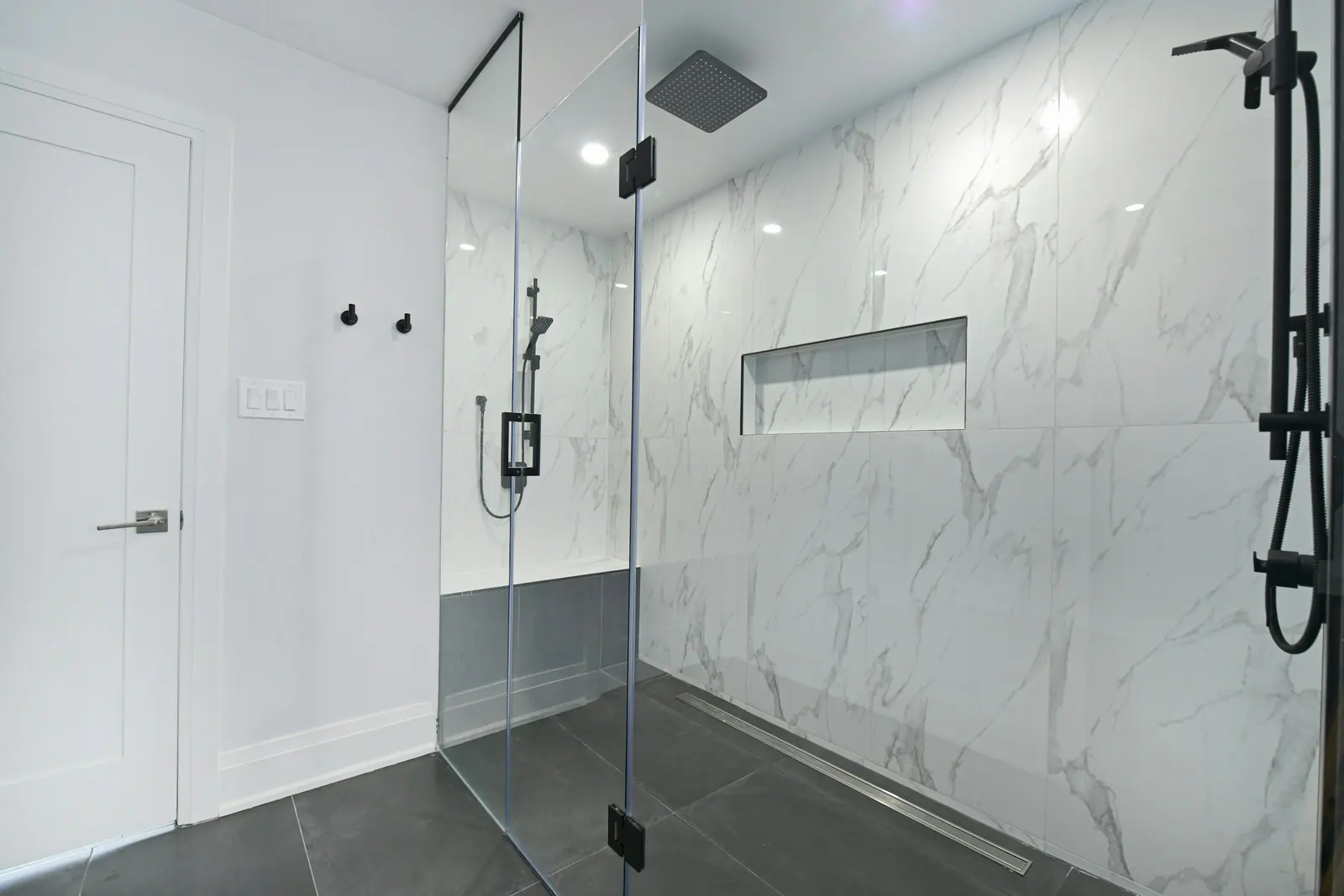
A bathroom floor needs to be stiff, flat and clean before tile goes down. On a wood subfloor we check for bounce and soft spots, add a layer or brace the joists where needed, and often lay an uncoupling membrane that lets the floor move slightly without cracking the tile. Old vinyl and adhesive come up first, so the mortar bonds to a sound surface.
FAQ
Frequently asked questions
Do tile showers need sealing?
Some parts do. Porcelain and glazed ceramic tile need no sealer, but standard cement-based grout should be sealed and resealed over time, and natural stone needs regular sealing. Epoxy and some urethane grouts resist stains without a sealer. Ask which grout your quote names, because it sets the upkeep.
Can you tile over existing tile?
On a floor where the old tile is flat, sound and firmly attached, sometimes. In a shower we do not, because the waterproofing behind the old tile cannot be checked or fixed, and the extra layer throws off the trim, the valve and the glass. Tearing out to sound framing is the safer path.
What is the best tile for a shower floor?
Small porcelain mosaics or textured porcelain are a strong choice for a shower floor: the grout joints and texture add grip, and small pieces follow the slope. Avoid polished stone and glossy tile underfoot, since they get slippery when wet. With a linear drain, larger tile can work because the floor slopes one way.
Why is my shower grout cracking?
Cracked grout usually means movement or water. Inside corners and the joint where the walls meet the floor should get flexible sealant, not grout, because they move. Cracks across the floor can point to a floor that flexes, and loose or dark tile near the drain can mean a failed pan. We find the cause before we quote a repair.
Can you put a heated floor under bathroom tile?
Yes. An electric heating mat or cable is set in a thin layer of mortar under the tile and wired to a thermostat on a ground-fault protected circuit. It has to be planned before the tile goes down and tested before and after setting, because a damaged cable cannot be reached later.
Get tile work that is right underneath
At the free in-home estimate we check what is behind your old tile and how flat and stiff the surfaces are, then give you a written quote.