Does Medicare pay for walk-in tubs? What to know
Does Medicare pay for walk-in tubs? What Medicare.gov and the CMS equipment list say, and where Medicare Advantage, IRS rules and the VA HISA grant fit.
Key takeaways
- Medicare Part B covers medically necessary durable medical equipment ordered for home use; the CMS equipment list we read has no entry for walk-in tubs.
- The same CMS list denies grab bars, bathtub lifts, bathtub seats and raised toilet seats as self-help, comfort, convenience or hygienic items.
- If an item is covered, Medicare.gov says you pay 20% of the Medicare-approved amount after the Part B deductible, when the supplier accepts assignment.
- IRS Publication 502 and the VA HISA grant are two other official routes worth checking; neither is a promise of payment.
Walk-in tubs are often marketed to older adults, so it is natural to ask whether Medicare will help pay. This article sticks to what official sources say: Medicare.gov, the CMS equipment reference list, IRS Publication 502 and the VA. We do not decide coverage, and nothing here is a promise that any program will pay. Coverage depends on your plan, your medical situation and the rules in force when you apply. Read this as a guide to the right questions, then confirm with Medicare, your plan or a tax professional before you buy.
In this article
Does Medicare pay for walk-in tubs?
Quick answer
Medicare's official sources we read do not list walk-in tubs as covered equipment. Medicare.gov says Part B covers medically necessary durable medical equipment when a doctor or other provider orders it for use in your home. The CMS durable medical equipment reference list we reviewed has no entry for walk-in tubs. That same list denies closely related items, such as grab bars, bathtub seats and bathtub lifts. If you are considering walk-in tub installation, budget on the basis that you may pay for it yourself, and ask Medicare directly before you sign.
What does Medicare count as durable medical equipment?
Quick answer
Durable medical equipment, or DME, is equipment that meets a specific federal definition. The CMS reference list quotes it: the item can withstand repeated use, meaning it could normally be rented and used by successive patients; it has an expected life of at least three years; it is primarily and customarily used to serve a medical purpose; it is generally not useful to a person without an illness or injury; and it is appropriate for use in the home.
Medicare.gov adds that Part B covers medically necessary DME when your doctor or other health care provider orders it for use in your home. Check any item against all five parts of the definition, and ask Medicare, before you assume it qualifies.
Bathroom items on the CMS equipment list
The CMS reference list names several bathroom items, and most are denied. The table quotes its entries. The version we read shows an effective date of June 9, 2025 and carries a banner saying it is an older version, so check the current list or ask Medicare before relying on any entry.
Bathroom items on the CMS durable medical equipment reference list
| Item | What the CMS reference list says |
|---|---|
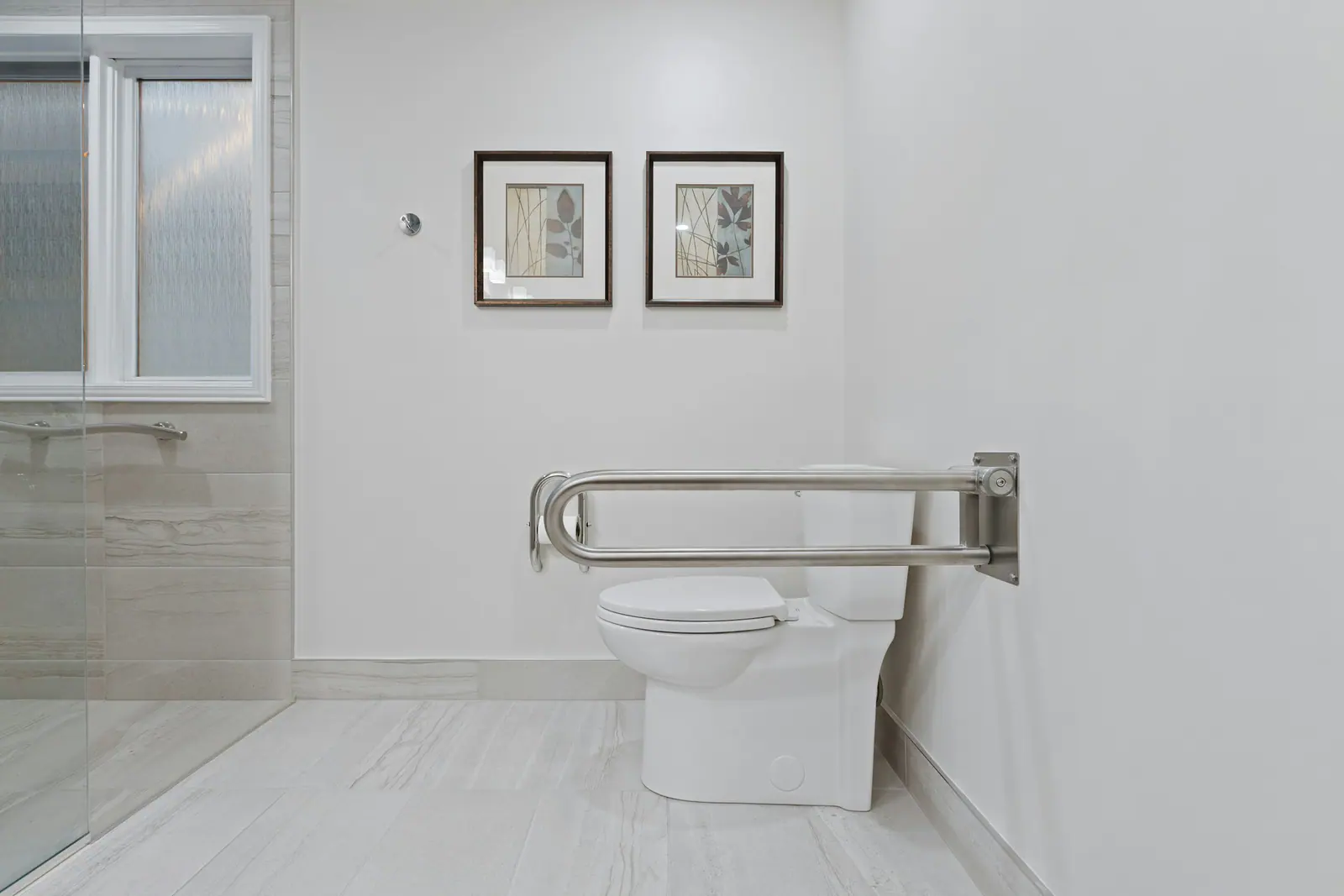
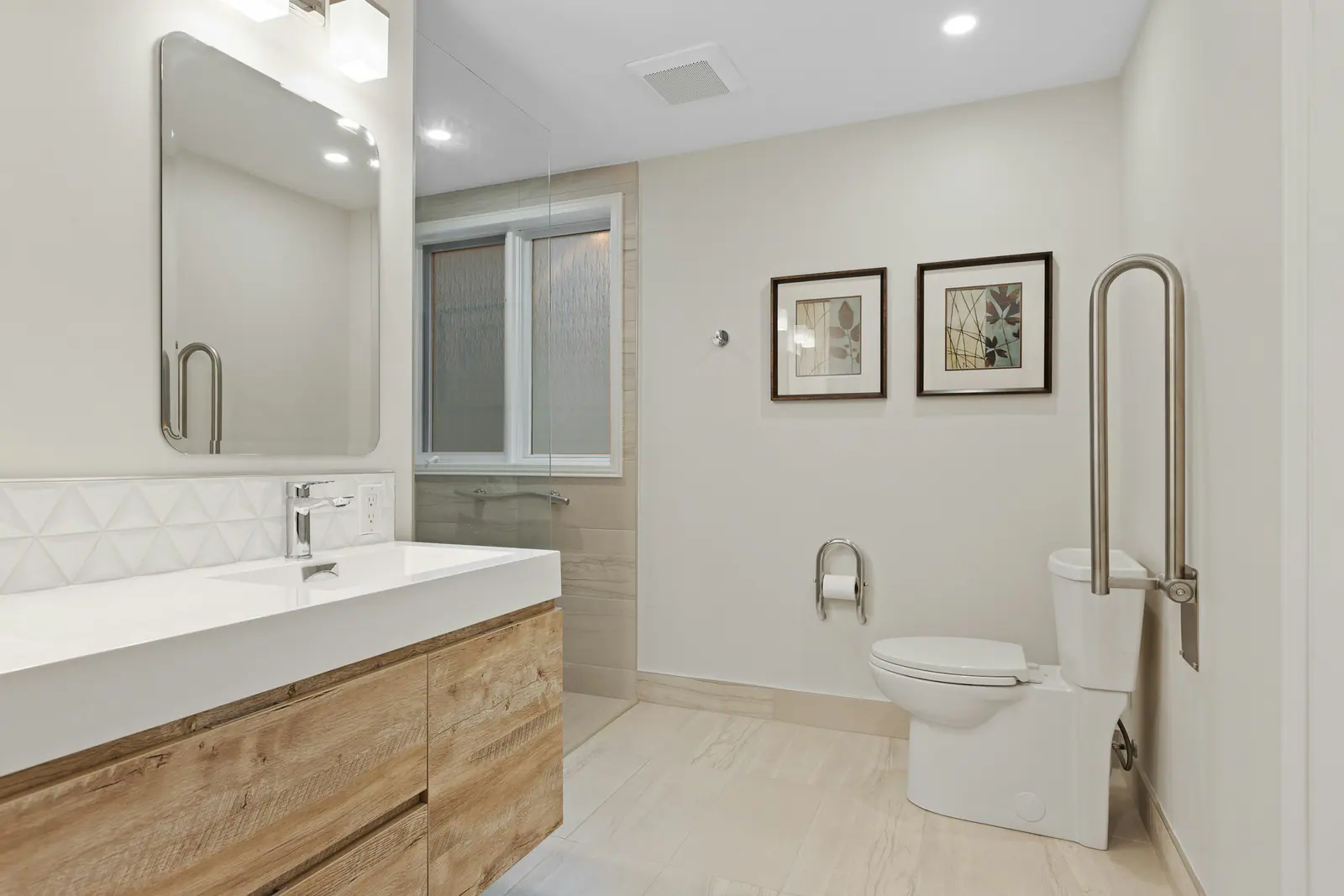
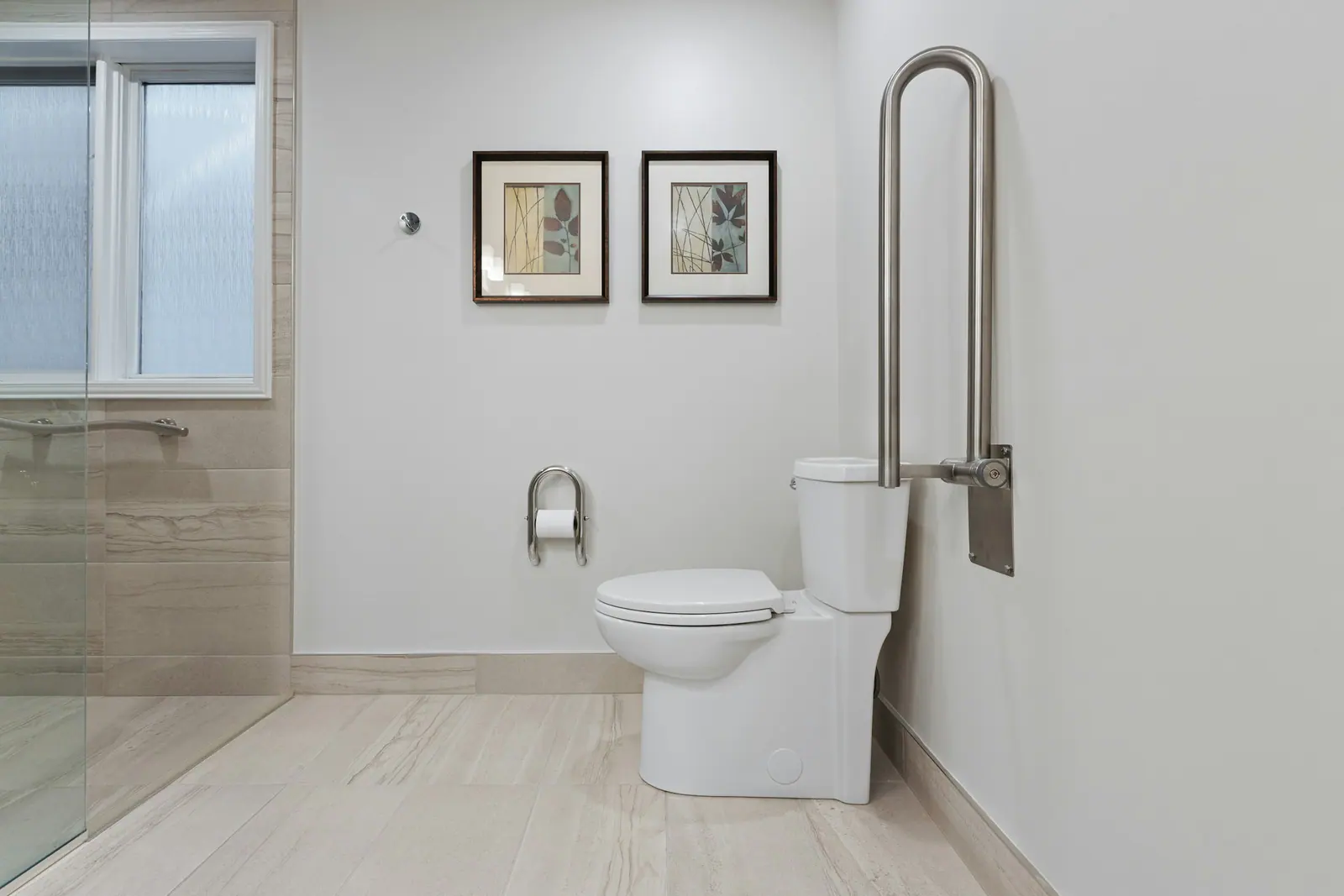
| Grab bars | Deny: self-help device; not primarily medical in nature |
| Bathtub lifts | Deny: convenience item; not primarily medical in nature |
| Bathtub seats | Deny: comfort or convenience item; hygienic equipment |
| Raised toilet seats | Deny: convenience item; hygienic equipment |
| Commodes | Covered if the patient is confined to bed or room |
| Whirlpool bath equipment | Covered if the patient is homebound and has a condition for which the bath can be expected to provide substantial therapeutic benefit justifying its cost |
| Portable whirlpool pumps | Deny: not primarily medical in nature; personal comfort items |
| Walk-in tubs | No entry in the version we read |
The whirlpool entry is narrow and tied to being homebound with a specific condition. The list does not say it applies to a walk-in tub, so do not assume it does.
What would you pay if Medicare covered an item?
Quick answer
If Medicare covered an item, you would still pay a share of its cost. Medicare.gov's commode chair page says that after you meet the Part B deductible, you pay 20% of the Medicare-approved amount if your supplier accepts assignment. Medicare.gov's cost page lists the 2026 Part B deductible and the 2026 standard Part B premium, so check it for the current amounts. Medicare.gov also describes Medigap as extra insurance from a private company that helps pay your share of costs in Original Medicare.
Can a Medicare Advantage plan help with a walk-in tub?
Quick answer
Whether a Medicare Advantage plan helps with a walk-in tub depends entirely on the plan. Medicare.gov says Medicare Advantage plans bundle Part A, Part B and usually Part D, and that most plans offer extra benefits Original Medicare does not cover, such as vision, hearing and dental. It does not list walk-in tubs as a standard extra benefit. Call your plan, ask whether any bathroom safety items or home changes are covered, ask what paperwork is needed, and get the answer in writing.
Make that call before you sign a purchase agreement for any tub. A written answer from the plan is the only answer that counts.
Medical expense rules in IRS Publication 502
A walk-in tub may count as a medical expense under IRS rules for home changes made for medical care. IRS Publication 502, for 2025 returns, says the cost of a permanent improvement is reduced by any increase in the home's value. It then lists changes made to accommodate a home to a disabled condition that usually do not increase value, including "installing railings, support bars, or other modifications to bathrooms." Only reasonable costs count, and costs driven by personal or style choices do not. You can deduct only the medical and dental expenses above 7.5% of your adjusted gross income. A tax professional can tell you how this applies to you.
Can veterans get help paying for bathroom changes?
Quick answer
Veterans who qualify can get help paying for bathroom changes through the VA's Home Improvements and Structural Alterations (HISA) grant. The VA page says HISA can pay for changes that allow use of essential lavatory and sanitary facilities, giving roll-in showers as an example, and for lowering sinks or counters. It lists a lifetime benefit with a higher limit for a service-connected disability, or a non-service-connected one if the veteran has a service-connected rating of at least 50%, and a lower limit for other disabilities. It does not cover new construction.
The application needs a VA physician's prescription, VA Form 10-0103, an itemized estimate and a photo of the area. A remodel quote that lists each change on its own line makes the estimate part easier to supply.

Paying for a walk-in tub yourself
Plan for the full price unless a program confirms otherwise in writing. Two 2026 cost guides publish installed prices for walk-in tubs: Fixr reports an average and a typical range, and This Old House's figure for a standard model with mid-range materials sits a little below Fixr's average, while noting that luxury models and complex installs cost the most. Our post on walk-in tub cost lists both guides' dollar figures.
For some people, a low-entry shower with a seat and grab bars meets the same safety goal. Our walk-in shower installation page shows that option, and our guide to grab bars and shower benches covers the parts that make a seated shower work.
Five steps before you sign for a tub
Confirm coverage first, then compare options. Working in this order keeps you from paying for something a program might have helped with, or from waiting on help that will not come. It also gives you the paperwork each office asks for, such as a doctor's note and an itemized quote, before you need it. Keep notes of each call, including the date and the name of the person you spoke with.
- Ask your doctor whether a walk-in tub or another bathroom change is medically necessary for you, and get it in writing.
- Call Medicare or your Medicare Advantage plan and ask about the specific item.
- If you are a veteran, contact your local VA Prosthetic and Sensory Aids Service about HISA.
- Ask a tax professional about IRS Publication 502.
- Get a written quote that lists the tub and the installation separately; the VA HISA application asks for an itemized estimate.
Our accessible bathroom remodel page covers other safety changes. We plan these projects for bathroom remodeling in the Kansas City metro with the itemized detail that applications such as HISA ask for. Read how it works to see the steps.
Frequently asked questions
Does Medicare cover walk-in tubs?
Medicare's official sources we read do not list walk-in tubs as covered equipment. Medicare.gov says Part B covers medically necessary durable medical equipment when a provider orders it for use in your home. The CMS durable medical equipment reference list we reviewed has no entry for walk-in tubs, and it denies related items such as grab bars and bathtub seats. Ask Medicare or your plan before you buy.
Will a Medicare Advantage plan pay for a walk-in tub?
It depends on the plan. Medicare.gov says most Medicare Advantage plans offer extra benefits that Original Medicare does not cover, such as vision, hearing and dental. It does not list walk-in tubs as a standard extra benefit. Call your plan, ask whether any bathroom safety items are covered, and ask for the answer in writing before you sign a purchase agreement.
Can I deduct a walk-in tub on my taxes?
IRS Publication 502, for 2025 returns, says certain home changes made for a disabled person's medical care, including support bars and other modifications to bathrooms, usually do not raise the home's value, so their cost may be included as a medical expense. Only medical and dental expenses above 7.5% of adjusted gross income can be deducted. Ask a tax professional how this applies to you.
Does the VA help veterans pay for bathroom changes?
The VA's Home Improvements and Structural Alterations (HISA) grant can pay for changes such as access to bathroom facilities, including roll-in showers. The VA page lists a lifetime benefit with a higher limit for qualifying service-connected conditions and a lower limit for other disabilities. It requires a prescription written or approved by a VA physician and an itemized estimate.
Does Medicare pay for grab bars or shower chairs?
The CMS durable medical equipment reference list denies grab bars as self-help devices that are not primarily medical in nature. It also denies bathtub seats and bathtub lifts as comfort or convenience items, and raised toilet seats as convenience items. Commodes can be covered when a patient is confined to bed or room. Check with Medicare for your situation.
Sources
The published pages this guide draws on. Every figure in it comes from one of them, never from our own prices.
Medicare.gov
Accessed
Medicare.gov
Accessed
Medicare.gov
Accessed
Centers for Medicare & Medicaid Services (CMS)
NCD 280.1: Durable Medical Equipment Reference List
Accessed
Internal Revenue Service
Publication 502: Medical and Dental Expenses (for 2025 returns)
Accessed
U.S. Department of Veterans Affairs
Home Improvements and Structural Alterations (HISA) Grant
Accessed
Fixr
How Much Does It Cost to Install a Walk-in Tub in 2026?
Accessed
This Old House
How Much Does Walk-In Tub Installation Cost? (2026 Pricing)
Accessed